

VisiFlora Reviews: Does the Gut-Eye Connection Actually Hold Up?
Affiliate Disclosure: This article contains affiliate links. If you make a purchase through one of these links, we may earn a commission at no extra cost to you. This has no effect on the honesty of our analysis below. We are not medical professionals, and nothing in this article should be taken as medical advice.
If you’ve spent any time researching eye-health supplements in 2026, you’ve probably run into VisiFlora. It’s hard to miss — dozens of “review” sites have already published near-identical breakdowns of its 22-ingredient formula, most of them reading suspiciously like the same template with the brand name swapped in.
We wanted to do something different: pull apart what VisiFlora actually claims, check those claims against what’s verifiable about its ingredients, and tell you plainly where the evidence is solid and where it’s still just marketing language wearing a lab coat.
What Is VisiFlora?
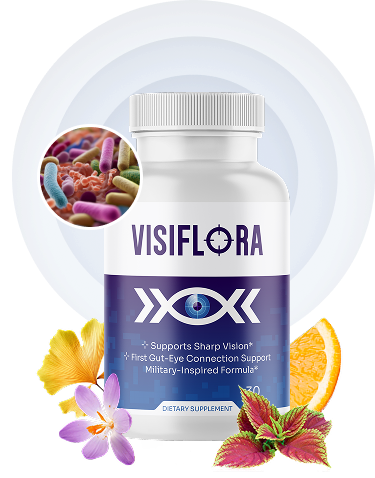
VisiFlora is a daily capsule supplement sold through ClickBank, positioned around a fairly specific idea: that long-term eye comfort and clarity are connected to gut health, not just to the eyes themselves. The company calls this the “gut-eye connection,” and it’s the entire premise the product is built on.
The formula combines 22 ingredients split into four functional groups — antioxidants, gut-barrier botanicals, circulation-support compounds, and macular-support nutrients. It’s manufactured in the US, marketed as non-GMO, stimulant-free, and vegan, and sold with a 60-day money-back guarantee.
See VisiFlora’s current pricing and bundle options →

The Gut-Eye Connection: Real Science or Clever Framing?
This is the part most reviews gloss over, so let’s slow down here.
The “gut-eye axis” is a real area of scientific interest — researchers do study how gut bacteria, inflammation, and barrier function in the intestines might influence tissues elsewhere in the body, including the eyes. That part isn’t invented.
What’s worth being skeptical about is how settled that science actually is. The gut-eye connection is still an emerging research area, not an established clinical pathway with the kind of large-scale human trials you’d want before treating it as proven. Most of the specific mechanism VisiFlora describes — toxins from gut bacteria crossing into the bloodstream and directly damaging retinal tissue — is a hypothesis being explored in early research, not something demonstrated in studies on this exact formula.
That doesn’t necessarily make the idea wrong. It does mean “may help support” is the honest way to describe it, not “fixes the root cause.” If a page promises a definitive, mechanistic guarantee here, that’s a sign of stronger marketing than stronger science.
What’s Actually Inside VisiFlora
Let’s go ingredient group by ingredient group, with what’s reasonably well-supported versus what’s still speculative.
Antioxidant Core (Astaxanthin, Vitamin C, Vitamin E, Copper, Selenium, Chromium)
Astaxanthin is a carotenoid antioxidant, and there’s a reasonable body of research on antioxidants generally playing a role in protecting cells — including eye tissue — from oxidative stress. Vitamin C and E are well-established antioxidants. Copper and selenium are trace minerals the body needs for normal function, including some eye-related enzymatic processes. Chromium’s role here is mostly tied to blood sugar regulation, which is relevant to eye health insofar as poorly managed blood sugar is a known risk factor for several eye conditions — but that’s an indirect connection, not a direct “protects your eyes” mechanism.
Gut-Barrier Botanicals (Grape Seed Extract, Rutin, Quercetin, Taurine, Alpha Lipoic Acid)
This group leans on traditional and early-stage research around gut lining and inflammation support. Grape seed extract, rutin, and quercetin are flavonoids studied for antioxidant and anti-inflammatory properties in general nutrition research — not eye-specific clinical trials. Taurine is an amino acid your body already produces and that’s found naturally in many protein-rich foods; some research links it to retinal cell function, but again, this is early-stage. Alpha lipoic acid is a genuine antioxidant compound used across multiple supplement categories, including some studied in metabolic health.
Circulation & Focus Botanicals (Ginkgo Biloba, Coleus Forskohlii, Eyebright)
Ginkgo biloba has decades of use in supplements aimed at circulation, and some studies have looked at its effect on blood flow. Whether that translates into a measurable eye-health benefit for a healthy adult taking a daily capsule is a separate, much less certain question. Eyebright has a long history of traditional use for eye comfort, but it doesn’t have strong modern clinical backing — it’s more folk-remedy than proven mechanism.
Macular Support Blend (Vitamin A, Lutein, Zeaxanthin, Zinc, Bilberry, Lycopene, Saffron)
This is the strongest-evidence group in the whole formula. Lutein and zeaxanthin are the two carotenoids your macula actually concentrates and uses to filter high-energy light — this is genuinely well-studied territory in eye nutrition research (it’s the same logic behind formulas like AREDS2, the eye-health nutrient combination studied for age-related macular degeneration). Vitamin A’s role in low-light vision is textbook nutrition science. Zinc at a moderate dose is commonly included in eye formulas for the same reason. Bilberry and saffron extract both have some supporting research on visual function, though the volume of human trials is smaller than for lutein and zeaxanthin specifically.
Bottom line on the formula: the macular support group is on solid nutritional ground. The gut-barrier and circulation groups are reasonable ingredients individually, but the specific story tying them together — “fixes the gut-eye connection” — is ahead of where the science currently sits.

Pros and Cons
What stands out positively:
- The macular support ingredients (lutein, zeaxanthin, bilberry, saffron) are genuinely relevant choices backed by real nutrition research
- Manufactured in the US in a facility that follows current Good Manufacturing Practice standards
- Transparent ingredient list, with no proprietary “blend” hiding actual dosages
- 60-day money-back guarantee, which is a meaningful risk reducer
- Non-GMO, stimulant-free, vegan — fits common dietary restrictions
Where to stay realistic:
- The “gut-eye connection” framing is more hypothesis than established science at this point
- Like virtually all supplements in this category, it cannot correct structural vision problems (nearsightedness, farsightedness, astigmatism) — those need an eye doctor, not a capsule
- Several ingredients are included at amounts you’d want to actually check against the supplement facts panel before assuming a clinically meaningful dose
- Results, if any, are reported as gradual — this isn’t positioned as a fast-acting product, and it shouldn’t be expected to act like one
Who Should Actually Consider This — and Who Shouldn’t Without Talking to a Doctor First
VisiFlora is marketed toward adults dealing with everyday visual fatigue: long screen time, age-related changes in night vision, or general interest in proactive eye nutrition. That’s a reasonable target audience for a nutrient-based supplement.
It’s worth pausing and talking to an eye-care professional before starting it (or any similar supplement) if you:
- Have a diagnosed eye condition like glaucoma, macular degeneration, diabetic retinopathy, or cataracts
- Take blood thinners — several botanical antioxidants in this category can interact with anticoagulant medication
- Are managing diabetes, given the chromium and alpha lipoic acid content
- Are pregnant or nursing
- Notice sudden vision changes, eye pain, flashes, or new floaters — these warrant a doctor’s visit regardless of any supplement, since they can signal something that needs prompt medical attention
Pricing and Guarantee
VisiFlora is sold exclusively through its official offer page, in three bundle sizes:
| Package | Bottles | Price Per Bottle | Total |
|---|---|---|---|
| Starter | 2 | $79 | $158 (+ small shipping fee) |
| Advanced | 3 | $59 | $177 (free US shipping) |
| Ultimate | 6 | $49 | $294 (free US shipping) |
Every order is backed by a 60-day money-back guarantee, and it’s billed as a one-time purchase — no subscription or recurring charge attached.
Check today’s pricing and current bundle availability →
Frequently Asked Questions
Is VisiFlora legit, or is it a scam? Based on what’s publicly available, it appears to be a legitimately manufactured supplement with a transparent ingredient list and a real money-back guarantee — both signs that point away from “scam” territory. That said, “legitimate company” and “guaranteed to work for you personally” are two different claims. Treat it as a reasonable supplement to try, not a guaranteed fix.
How long before I’d notice anything? Supplement-based nutrient support is, by nature, gradual. Multiple independent sources reviewing this category suggest a window of several weeks to a couple of months of consistent use before forming an opinion — which lines up with how long it typically takes nutrients like lutein and zeaxanthin to build up in macular tissue.
Are there side effects? No major side effects are commonly reported for the core ingredient list at typical supplement doses, though anyone on medication — especially blood thinners or diabetes medication — should review the full ingredient list with a pharmacist or doctor first.
Is this a one-time purchase or a subscription? One-time purchase, based on the official order page. No recurring billing is built into the standard checkout.

Our Honest Verdict
VisiFlora isn’t a miracle product, and the gut-eye narrative is doing more marketing work than current science can fully back up. But underneath that framing is a formula with a legitimately well-chosen macular support blend, a transparent ingredient list, a real refund policy, and a manufacturing standard that checks the boxes you’d want from a US-made supplement.
If you’re looking for proactive nutritional support for everyday eye strain and you go in with realistic expectations — gradual, supportive, not a replacement for an actual eye exam — it’s a reasonable supplement to try, especially with a guarantee that limits your downside.
If you have a diagnosed eye condition or take medication that could interact with botanical antioxidants, talk to your doctor before adding it to your routine — that’s not a disclaimer for legal cover, it’s genuinely the responsible first step.
View VisiFlora’s official offer and current pricing →
Statements in this article have not been evaluated by the Food and Drug Administration. This product is not intended to diagnose, treat, cure, or prevent any disease. Individual results vary. Consult your physician before starting any new supplement, especially if you are pregnant, nursing, taking medication, or managing a diagnosed medical condition. This article is independently written and is not affiliated with or endorsed by the manufacturer of VisiFlora.